

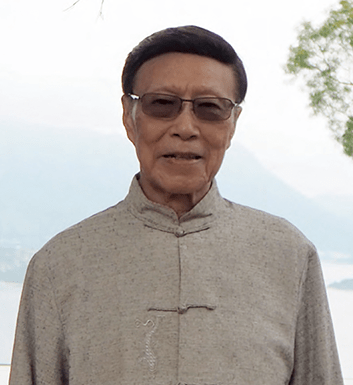

Professor King Chia-Lun 金嘉倫教授 – A Distinguished Artist from Hong Kong.
He is a renowned artist in Hong Kong, celebrated for his numerous accolades and significant contributions to the art world. His works have been showcased in various prestigious art exhibitions, including:
His works have been featured in numerous publications, and he has held solo exhibitions in cities such as Hong Kong, Taipei, Seoul, Guangzhou, and Nanjing. He also received the highest honor at the International Calligraphy and Painting Exhibition in Japan.
In 2011, as the founder of Taichi Aesthetics in Hong Kong, he led his team to Beijing to participate in the First Contemporary Chinese Calligraphy and Painting Masterpiece Exhibition. His works received great acclaim, and he was honored with the title of “One of the 100 Most Outstanding Calligraphy and Painting Artists in China” by the China International Culture Exchange Center and the Chinese Calligraphy and Painting Association.
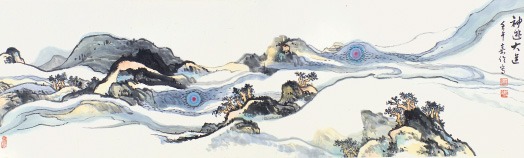
The Creation of Jin Taichi Aesthetic Calligraphy and Painting
He introduced the concept of “Calligraphy and Painting as One, Bridging Tradition and Modernity”. His Taichi-inspired calligraphy integrates the “writing” essence of cursive script with the “artistic conception” of traditional Chinese painting. By harmonizing yin and yang, Taichi aesthetics employs the interplay of black and white, void and solid, to create contemporary works with aesthetic value.
In his groundbreaking artistic approach, Professor Kam combines the spirit of traditional Chinese culture with Western art innovations. Using the essence of Taichi aesthetics, the six principles of Chinese painting, and the universal visual beauty laws, he pioneers a new style of Chinese landscape painting rich in cultural elements yet distinctly modern.
Calligraphy and Painting as One, Bridging Tradition and Modernity
Through a profound study of Taichi aesthetics, Professor Kam synthesizes Western artistic innovation into traditional Chinese calligraphy and painting. He developed a unique theory, emphasizing three core principles:
These elements combine to create a complete and dynamic work of art, embodying life itself.
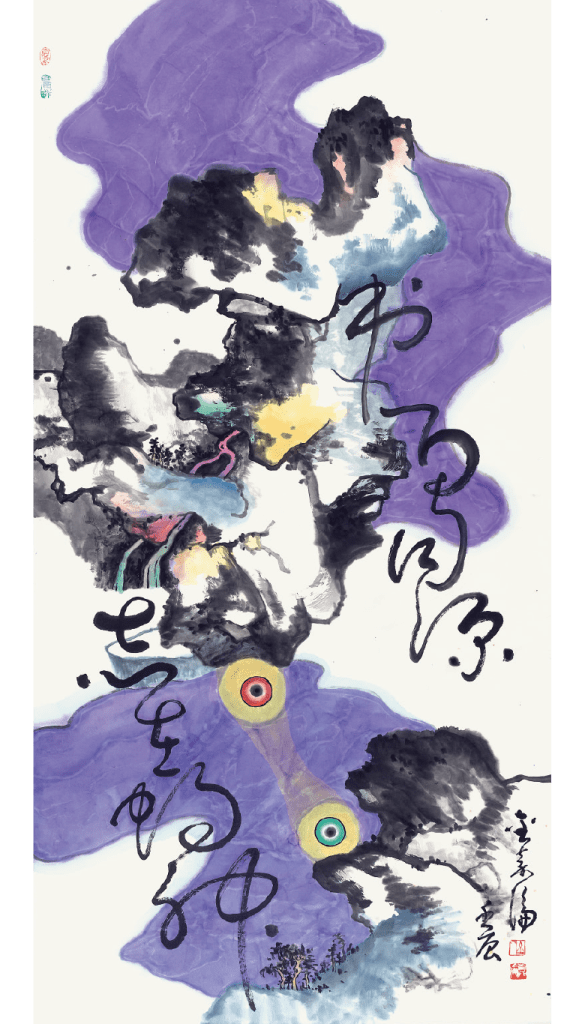
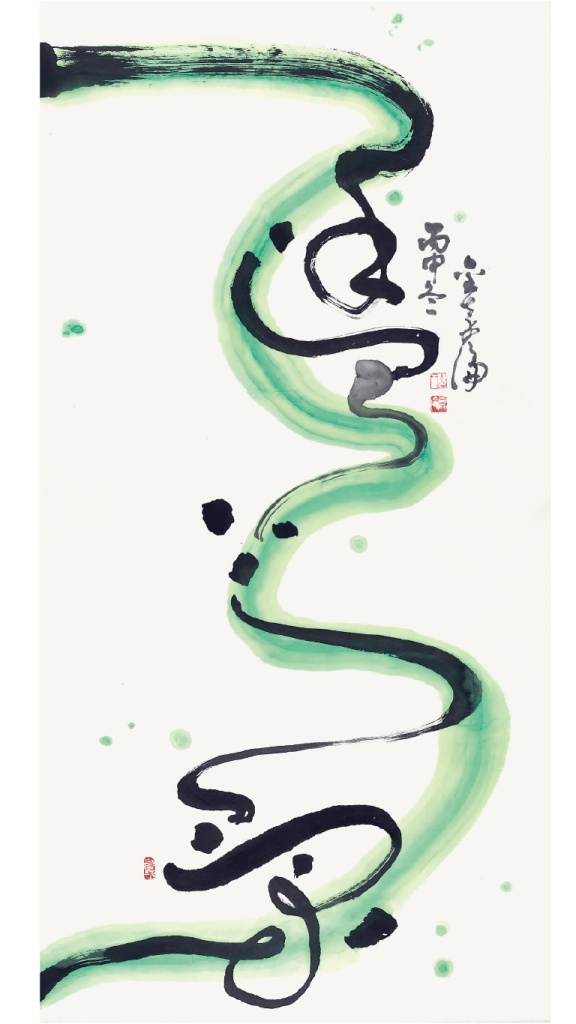
Taichi Aesthetics: The Soul of Chinese Painting
“What makes Chinese painting alive and imbued with a strong sense of vitality?” Professor Kam attributes this to the fluidity of the brush and the infusion of Taichi aesthetics. Taichi emphasizes the balance of yin and yang and the natural harmony of Daoist philosophy. When applied to painting, these principles bring forth the highest artistic realms of qiyun shengdong (vivid rhythm and energy) and something from nothing.
In 2006, he developed a Cursive Script Art Certificate Program for City University of Hong Kong. Using modern teaching methods, even those without a background in calligraphy could master cursive script techniques in a short time.
Despite his advanced age, he remains dedicated to promoting Taichi aesthetics. Recently, he established Jin’s Taichi Aesthetic Calligraphy and Painting to further spread this ancient wisdom and its integration into modern Chinese art.
A Vision for the Future
He envisions Taichi aesthetics as a guiding theory for the modernization of Chinese calligraphy and painting. He hopes to preserve and expand upon this traditional Chinese philosophy, leaving an indelible mark on the global art scene. By promoting Taichi aesthetics, he aspires to ensure that this cultural treasure will continue to thrive and inspire future generations.